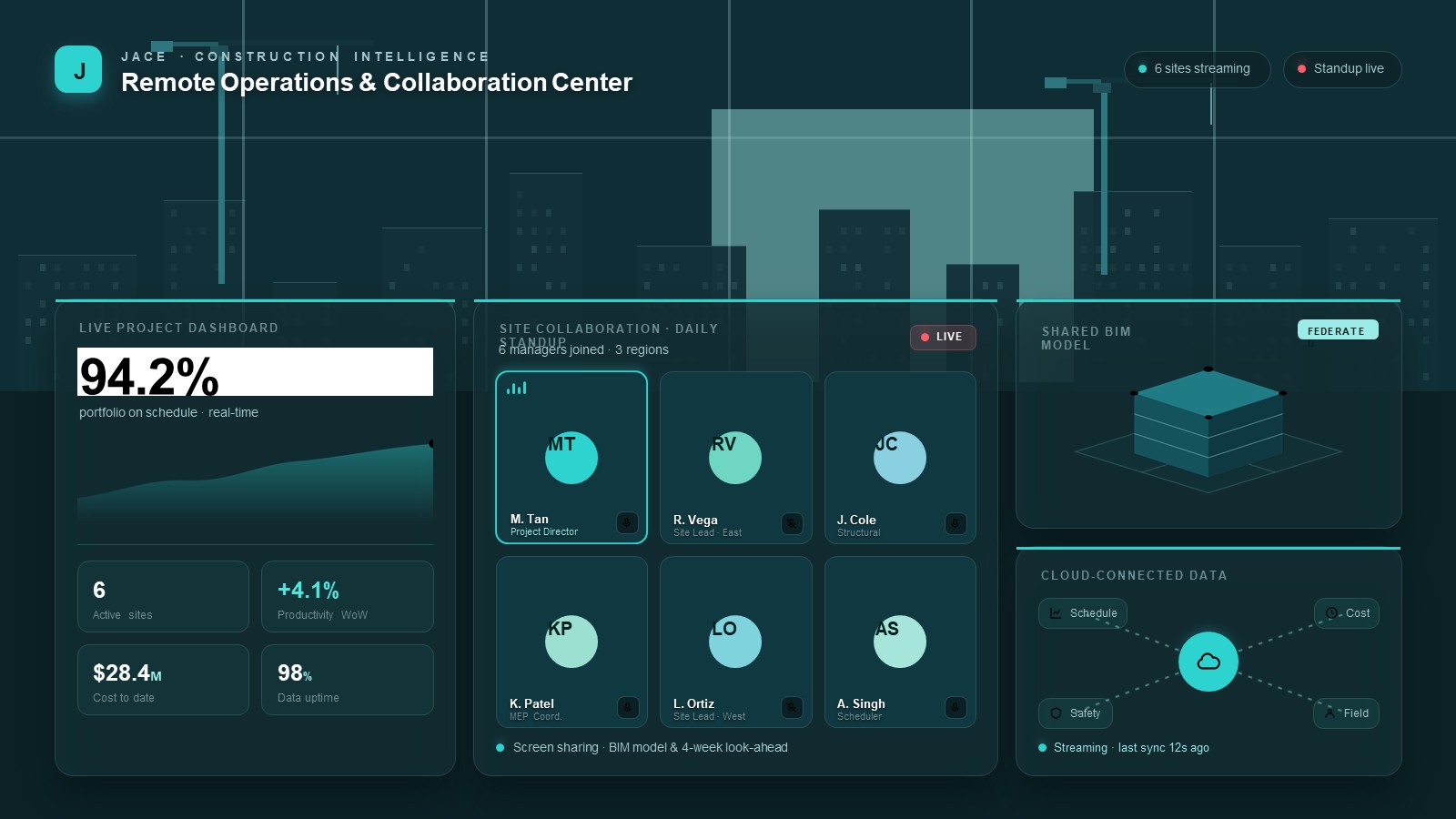
How Modern Construction Teams Deliver Projects More Efficiently through Remote Management
Introduction
The construction industry has traditionally been associated with physical site presence, face-to-face meetings, and on-site supervision. However, advancements in technology, cloud collaboration platforms, project controls systems, and digital communication tools have transformed the way construction projects are managed. Today, many critical project management functions can be performed remotely while maintaining high levels of efficiency, accountability, and project control. Remote Construction Management has become an increasingly popular solution for contractors, developers, consultants, and project owners seeking access to experienced construction professionals without the cost of maintaining large in-house teams. This article explains what remote construction management is, how it works, its benefits, and why organizations around the world are adopting remote construction support services.
What Is Remote Construction Management?
Remote Construction Management refers to the delivery of construction management, project controls, planning, contract administration, reporting, and technical support services from an off-site location. Rather than requiring all project personnel to be physically present at the construction site, many management functions are performed remotely using digital tools and structured communication systems. Remote construction management allows organizations to access experienced professionals who support project delivery without increasing site-based staffing requirements.
Why Remote Construction Management Is Growing
Several factors have contributed to the growth of remote construction support services. These include:
- Increased Project Complexity
- Skilled Labor Shortages
- Rising Overhead Costs
- Digital Transformation
- Global Workforce Availability
- Cloud-Based Collaboration Platforms
Organizations are increasingly recognizing that many management activities do not require permanent site presence. As a result, remote support models have become a practical and cost-effective solution.
Which Construction Functions Can Be Managed Remotely?
Many construction management activities can be successfully performed off-site.
Project Planning & Scheduling
Planning professionals can remotely develop and maintain:
- Primavera P6 Schedules
- Baseline Programs
- Recovery Schedules
- Look-Ahead Schedules
- Progress Updates
Project schedules can be monitored and updated using information provided by site teams.
Project Controls
Remote project controls services may include:
- Progress Monitoring
- Cost Tracking
- Performance Reporting
- Earned Value Analysis
- Critical Path Analysis
- Delay Analysis
Project controls professionals provide management with visibility into project performance.
Quantity Take-Off & Estimation
Estimators can review project drawings and prepare:
- Quantity Take-Offs
- Bills of Quantities
- Cost Estimates
- Tender Pricing Support
These activities are commonly delivered remotely.
Contract Administration
Remote contract administration services often include:
- Contract Reviews
- Change Order Management
- Claims Support
- Extension of Time Claims
- Contract Correspondence
Proper documentation and communication systems support effective remote contract management.
Document Control
Document management activities are highly suited for remote delivery.
Examples include:
- Drawing Control
- RFI Tracking
- Submittal Management
- Document Registers
- Revision Tracking
Modern document management systems facilitate efficient remote collaboration.
Project Reporting
Remote teams frequently support:
- Daily Reports
- Weekly Reports
- Monthly Reports
- Executive Dashboards
- KPI Reporting
Accurate reporting improves project visibility and decision-making.
Functions That Still Require Site Presence
Although many management activities can be performed remotely, some tasks remain site-dependent. Examples include:
- Physical Inspections
- Site Supervision
- Quality Inspections
- Safety Management
- Material Verification
- Construction Execution
Remote construction management is most effective when combined with competent site personnel. The objective is not to replace site teams but to strengthen them.
Technologies That Enable Remote Construction Management
Modern construction projects rely on technology to support remote collaboration. Common tools include:
Planning Software
- Primavera P6
- Microsoft Project
Communication Platforms
- Microsoft Teams
- Zoom
- Google Meet
Document Management Systems
- Autodesk Construction Cloud
- Procore
- Aconex
- SharePoint
Reporting Tools
- Power BI
- Excel Dashboards
- Google Data Studio
These technologies enable real-time communication and project visibility.
Benefits of Remote Construction Management
Reduced Project Overheads
Organizations can access specialized expertise without hiring additional full-time staff. This reduces:
- Payroll Costs
- Accommodation Expenses
- Office Costs
- Travel Expenses
Access to Experienced Professionals
Many projects require specialized expertise that may not be available locally. Remote support provides access to:
- Planning Engineers
- Project Controls Specialists
- Contract Administrators
- Construction Managers
- Quantity Surveyors
This expands the talent pool available to project teams.
Improved Project Controls
Dedicated remote professionals can focus on:
- Schedule Management
- Cost Monitoring
- Progress Tracking
- Reporting
This often results in stronger project controls and better decision-making.
Increased Flexibility
Organizations can scale support resources based on project needs. Support may be:
- Project-Based
- Part-Time
- Full-Time
- On-Demand
This flexibility improves resource efficiency.
Better Documentation
Remote teams often strengthen:
- Document Control
- Reporting Systems
- Contract Records
- Communication Logs
Improved documentation reduces project risks and supports contract administration.
Common Misconceptions About Remote Construction Management
"Construction Management Must Be Performed On Site"
While site supervision requires physical presence, many management functions can be effectively delivered remotely.
"Remote Teams Cannot Understand Project Conditions"
Experienced construction professionals rely on:
- Site Reports
- Progress Photos
- Video Meetings
- Project Data
- Site Team Feedback
This information provides a comprehensive understanding of project conditions.
"Remote Support Reduces Control"
In many cases, remote support actually improves control through enhanced reporting, monitoring, and documentation systems.
How Remote Construction Management Supports Contractors
Contractors often use remote support to:
- Reduce Overhead Costs
- Improve Planning Accuracy
- Strengthen Project Controls
- Enhance Contract Administration
- Improve Reporting Quality
- Support Tendering Activities
Remote teams become an extension of the contractor's existing workforce.
How Remote Construction Management Supports Developers and Owners
Developers and project owners benefit from:
- Independent Project Reviews
- Schedule Audits
- Cost Monitoring
- Risk Assessments
- Executive Reporting
Remote consultants provide valuable oversight and objective project analysis.
Signs Your Project Could Benefit from Remote Support
Organizations often benefit from remote construction management when experiencing:
- Limited Internal Resources
- Rapid Business Growth
- Multiple Concurrent Projects
- Weak Project Controls
- Reporting Challenges
- Documentation Issues
- Budget Constraints
Remote support provides additional expertise without major organizational changes.
Best Practices for Successful Remote Construction Management
To maximize effectiveness:
- Establish Clear Communication Channels: Define meeting schedules and reporting procedures.
- Maintain Updated Project Information: Ensure schedules, reports, and documentation remain current.
- Use Collaborative Technologies: Implement digital platforms that support information sharing.
- Define Roles and Responsibilities: Clearly assign responsibilities between site and remote teams.
- Focus on Performance Measurement: Monitor KPIs and project performance indicators regularly.
The Future of Construction Management
Digital transformation continues to reshape the construction industry. Emerging trends include:
- BIM Integration
- Cloud Collaboration
- Artificial Intelligence
- Digital Twins
- Advanced Analytics
- Remote Project Controls
As technology evolves, remote construction management will become increasingly common across the industry. Organizations that embrace these approaches are likely to achieve greater efficiency and competitiveness.
Conclusion
Remote Construction Management is no longer a future concept—it is a practical and proven solution being used on projects worldwide. By combining experienced professionals, digital technologies, structured communication, and effective project controls, organizations can improve project performance while reducing operational costs. Whether supporting planning, scheduling, project controls, contract administration, reporting, or documentation, remote construction management provides contractors, developers, and project owners with flexible access to specialized expertise. For organizations seeking to improve efficiency, strengthen project controls, and reduce overheads, remote construction management represents a powerful modern project delivery solution.
No comments yet. Be the first to share your thoughts!
Leave a Comment