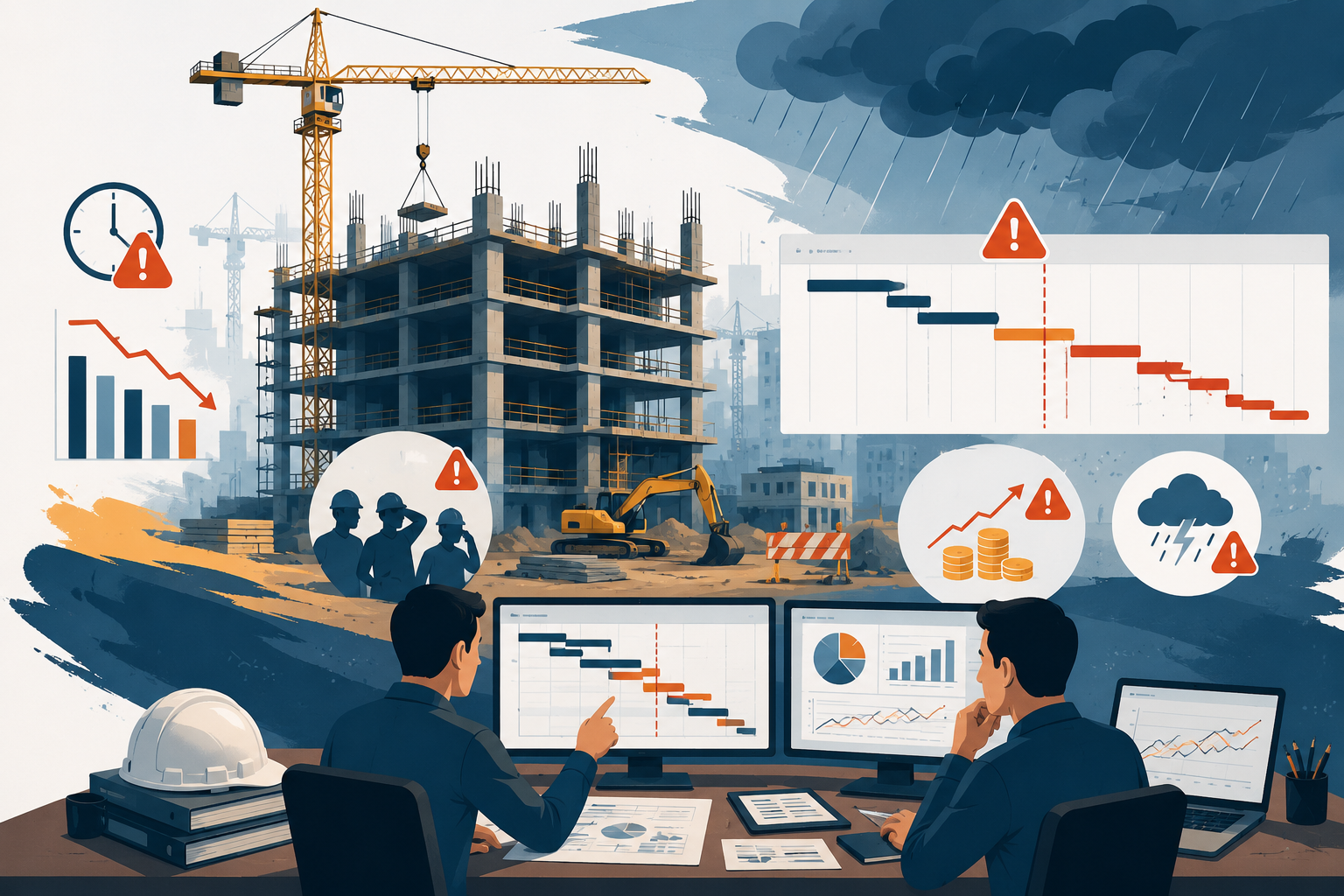
Common Causes of Construction Delays and How to Prevent Them
Introduction
Construction projects are complex undertakings involving multiple stakeholders, contractors, consultants, suppliers, regulatory authorities, and project teams. Even the most carefully planned projects can experience delays that affect completion dates, increase costs, and reduce profitability. Construction delays remain one of the most common challenges faced by contractors and project owners worldwide. Delays can lead to contractual disputes, extension of time claims, liquidated damages, loss of productivity, and strained client relationships. Understanding the common causes of construction delays is the first step toward implementing effective project controls and minimizing schedule risks. This article explores the major causes of construction delays and provides practical strategies for preventing them.
What Is a Construction Delay?
A construction delay occurs when project activities take longer than planned, resulting in a failure to achieve scheduled milestones or project completion dates. Delays can affect:
- Individual activities
- Project phases
- Critical path activities
- Overall project completion
The impact of delays often extends beyond schedule performance and may affect:
- Project costs
- Resource utilization
- Cash flow
- Contractual obligations
- Client satisfaction
Why Construction Delays Matter
Construction delays can create serious consequences for both contractors and project owners. Potential impacts include:
- Increased project costs
- Extended site overheads
- Reduced productivity
- Resource conflicts
- Extension of Time (EOT) claims
- Contractual disputes
- Liquidated damages
- Loss of business opportunities
Projects that effectively manage schedule risks are more likely to achieve successful outcomes.
1. Poor Project Planning
One of the leading causes of construction delays is inadequate planning during project initiation. Common planning deficiencies include:
- Unrealistic project durations
- Missing activities
- Incorrect activity sequencing
- Incomplete resource planning
- Lack of risk assessment
Without a realistic baseline schedule, projects often encounter difficulties during execution.
Prevention Strategies
- Develop detailed project schedules
- Conduct constructability reviews
- Use Primavera P6 or MS Project
- Involve key stakeholders during planning
- Establish realistic durations
Proper planning forms the foundation of successful project delivery.
2. Design Changes and Scope Creep
Construction projects frequently experience changes after work has commenced. Examples include:
- Revised drawings
- Additional work requirements
- Client-requested modifications
- Design development changes
Scope changes often disrupt planned work sequences and impact critical path activities.
Prevention Strategies
- Complete design development before construction
- Establish formal change management procedures
- Review design documents thoroughly
- Monitor variation requests closely
Effective change control minimizes disruption and schedule impacts.
3. Delayed Approvals and Decision-Making
Projects often depend on timely decisions and approvals from clients, consultants, and regulatory authorities. Delays may occur due to:
- Slow drawing approvals
- Delayed material approvals
- Late responses to RFIs
- Delayed permit issuance
When critical approvals are delayed, project progress can quickly slow down.
Prevention Strategies
- Maintain approval tracking logs
- Establish response deadlines
- Conduct regular coordination meetings
- Escalate critical issues promptly
Efficient communication improves project responsiveness.
4. Material Procurement Delays
Materials are essential for maintaining project momentum. Common procurement-related issues include:
- Late supplier deliveries
- Material shortages
- Import restrictions
- Transportation disruptions
- Supply chain issues
Material delays often affect critical construction activities.
Prevention Strategies
- Develop procurement schedules
- Identify long-lead items early
- Maintain supplier communication
- Monitor procurement progress regularly
Effective procurement planning reduces schedule risk.
5. Labor Shortages and Productivity Issues
Labor availability significantly affects project performance. Common workforce challenges include:
- Skilled labor shortages
- High workforce turnover
- Poor supervision
- Low productivity
- Industrial disputes
Labor-related issues often result in extended activity durations.
Prevention Strategies
- Conduct workforce planning
- Monitor productivity trends
- Provide adequate supervision
- Implement workforce retention strategies
A stable and productive workforce supports project success.
6. Adverse Weather Conditions
Weather can have a significant impact on construction activities. Examples include:
- Heavy rainfall
- Extreme temperatures
- Strong winds
- Flooding
- Storm events
Weather-related delays are particularly common on infrastructure and external works projects.
Prevention Strategies
- Consider seasonal conditions during planning
- Develop weather contingency plans
- Monitor forecasts regularly
- Adjust work sequences where possible
Proactive planning can reduce weather-related disruptions.
7. Poor Site Management
Ineffective site management often contributes to project delays. Common issues include:
- Inadequate supervision
- Poor coordination
- Safety incidents
- Resource conflicts
- Inefficient work sequencing
Even well-planned projects can suffer when site execution is poorly managed.
Prevention Strategies
- Establish clear site procedures
- Conduct regular progress reviews
- Improve communication channels
- Monitor performance indicators
Strong site leadership improves project execution.
8. Equipment Breakdowns and Resource Constraints
Construction activities depend heavily on equipment availability. Problems may include:
- Equipment failures
- Maintenance issues
- Insufficient equipment capacity
- Delayed mobilization
Resource shortages can significantly impact productivity.
Prevention Strategies
- Implement preventive maintenance programs
- Monitor equipment utilization
- Maintain backup equipment where possible
- Plan resource requirements carefully
Reliable resources support continuous project progress.
9. Contractual and Commercial Issues
Commercial disputes can create major project disruptions. Examples include:
- Payment delays
- Contract interpretation disputes
- Variation disagreements
- Claims and counterclaims
Unresolved commercial issues often affect project performance and stakeholder relationships.
Prevention Strategies
- Maintain strong contract administration
- Keep accurate project records
- Address disputes early
- Conduct regular contract reviews
Effective contract management supports project continuity.
10. Inadequate Communication and Coordination
Construction projects involve multiple stakeholders working simultaneously. Communication failures may result in:
- Conflicting instructions
- Rework
- Delayed decisions
- Coordination problems
Poor communication frequently contributes to avoidable delays.
Prevention Strategies
- Hold regular coordination meetings
- Maintain communication protocols
- Use project collaboration platforms
- Issue timely reports and updates
Strong communication improves project alignment.
The Role of Project Controls in Preventing Delays
Project Controls play a critical role in identifying and mitigating schedule risks. Key project controls activities include:
- Schedule Development
- Progress Monitoring
- Critical Path Analysis
- Resource Planning
- Risk Management
- Performance Reporting
Project controls provide early warning indicators that help management address issues before they become major delays.
How Primavera P6 Helps Manage Construction Delays
Primavera P6 enables project teams to:
- Develop detailed schedules
- Identify critical path activities
- Monitor progress
- Analyze delays
- Forecast completion dates
- Develop recovery schedules
Many successful projects rely on Primavera P6 as part of their overall project controls strategy.
Common Warning Signs of Potential Delays
Project teams should monitor indicators such as:
- Missed milestones
- Falling productivity rates
- Procurement delays
- Resource shortages
- Increasing variation orders
- Unresolved RFIs
- Slow approval processes
Early detection allows management to take corrective action before delays escalate.
Best Practices for Delay Prevention
Organizations seeking better schedule performance should:
- Invest in professional planning and scheduling
- Maintain updated project schedules
- Strengthen project controls systems
- Improve contract administration
- Monitor project risks continuously
- Conduct regular progress reviews
- Implement effective reporting systems
These practices significantly improve project outcomes.
Conclusion
Construction delays are among the most significant challenges facing modern construction projects. While some delays are unavoidable, many can be prevented through effective planning, project controls, risk management, communication, and contract administration. Organizations that invest in professional scheduling, progress monitoring, and project controls are better equipped to identify risks early, implement corrective actions, and maintain project performance. By understanding the common causes of delays and adopting proactive management practices, contractors and project owners can improve schedule certainty, reduce disputes, and achieve more successful project delivery.
No comments yet. Be the first to share your thoughts!
Leave a Comment