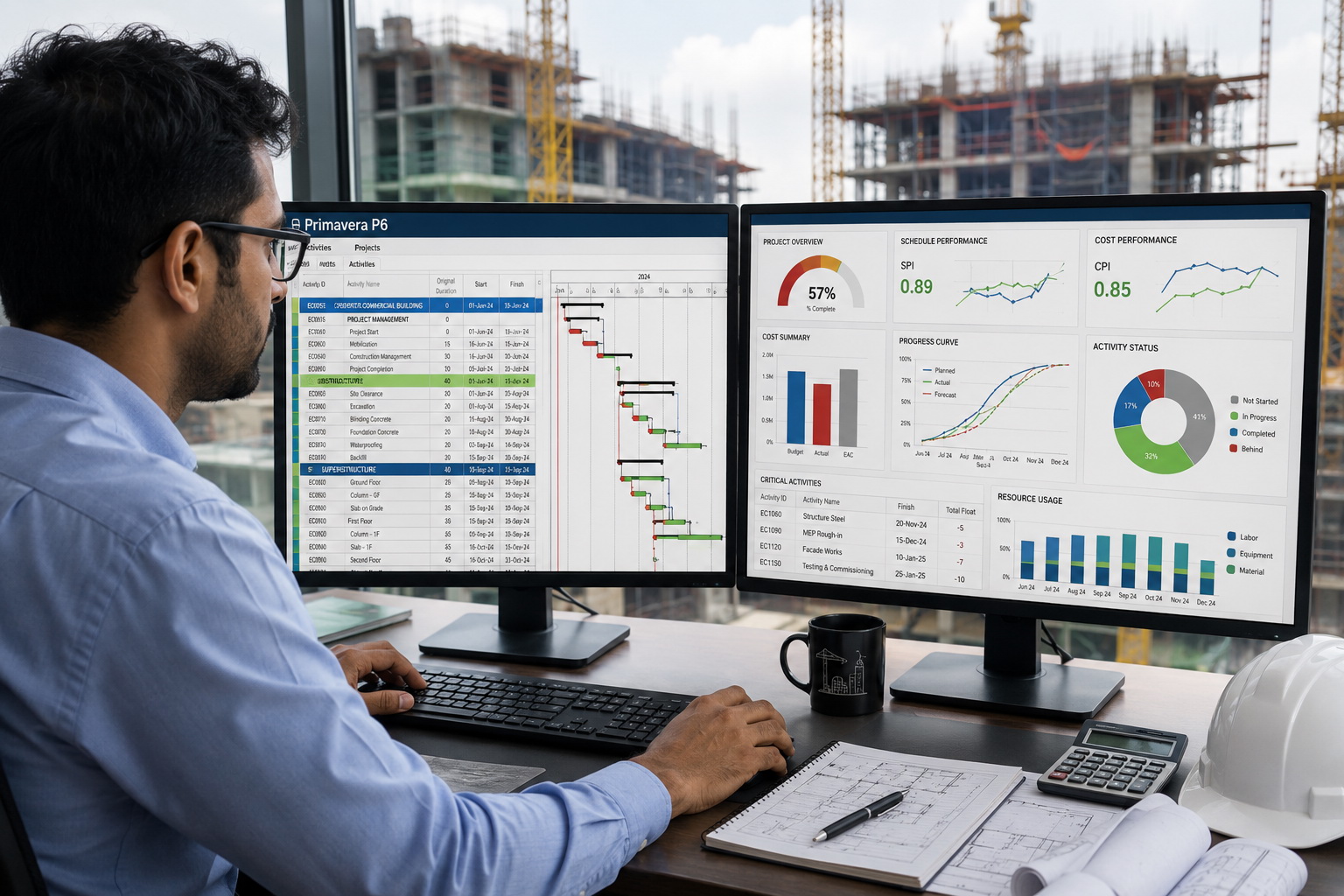
Why Successful Projects Depend on Effective Control Systems
Introduction
Construction projects today are becoming increasingly complex. Tight schedules, rising material costs, labor shortages, contractual obligations, and stakeholder expectations create significant challenges for project teams. While planning is essential, planning alone does not guarantee project success. Projects require continuous monitoring, analysis, and corrective action throughout the project lifecycle.
This is where Construction Project Controls play a critical role. Project controls provide the systems, processes, and tools necessary to monitor project performance, identify deviations, and support informed decision-making. Organizations that implement effective project controls consistently achieve better outcomes in terms of schedule, cost, quality, and risk management.
This article explains the importance of construction project controls and the key benefits they bring to contractors, developers, project owners, and construction managers.
What Are Construction Project Controls?
Construction Project Controls refer to the processes used to plan, monitor, measure, and control project performance. Project controls focus on answering key questions:
- Is the project progressing according to plan?
- Are costs within budget?
- Are resources being utilized effectively?
- Are project risks increasing?
- Will the project finish on time?
Project controls provide management teams with accurate information that supports timely and informed decisions. A typical project controls system includes:
- Scheduling
- Cost Control
- Progress Measurement
- Resource Management
- Risk Management
- Performance Reporting
- Change Management
Together, these elements help ensure successful project delivery.
Why Construction Projects Need Project Controls
Many construction projects begin with detailed schedules and budgets but fail due to insufficient monitoring and control. Common project challenges include:
- Schedule Delays
- Cost Overruns
- Productivity Losses
- Scope Changes
- Resource Shortages
- Contractual Disputes
Without effective project controls, these issues often remain unnoticed until they become major problems. Project controls provide early warning indicators that allow project teams to take corrective action before issues escalate.
Key Benefits of Construction Project Controls
Improved Schedule Performance
One of the primary objectives of project controls is maintaining project schedules. Through continuous monitoring and analysis, project teams can:
- Track progress against baseline schedules
- Identify delays early
- Monitor critical activities
- Develop recovery plans
- Improve schedule forecasting
Projects with strong schedule controls are significantly more likely to achieve planned completion dates.
Better Cost Control
Construction costs can increase rapidly if not monitored properly. Project controls help organizations:
- Track actual costs
- Compare costs against budgets
- Monitor productivity
- Analyze cost trends
- Forecast final project costs
Early identification of cost variances enables management to implement corrective actions before budgets are exceeded.
Enhanced Decision-Making
Project managers make hundreds of decisions throughout a project's lifecycle. Accurate project controls data provides management with reliable information regarding:
- Progress Status
- Cost Performance
- Resource Utilization
- Project Risks
- Forecast Completion Dates
Better information leads to better decisions.
Early Identification of Risks
Risk management is a fundamental component of project controls. Potential risks may include:
- Material Delivery Delays
- Labor Shortages
- Weather Impacts
- Design Changes
- Contractual Issues
Project controls systems help identify and evaluate risks before they significantly affect project performance. Proactive risk management reduces uncertainty and improves project stability.
Increased Productivity
Productivity directly affects both schedule and cost performance. Project controls enable teams to:
- Measure productivity rates
- Compare planned versus actual performance
- Identify inefficiencies
- Optimize resource allocation
Improved productivity contributes to increased project profitability.
Improved Resource Management
Construction projects rely on effective coordination of:
- Labor
- Equipment
- Materials
- Subcontractors
Project controls help ensure that resources are available when needed and utilized efficiently. This reduces idle time and improves overall project performance.
Stronger Contract Administration
Construction contracts often require:
- Schedule Updates
- Progress Reports
- Cost Reports
- Delay Notifications
- Claims Documentation
Project controls provide the documentation necessary to support contractual obligations. Proper documentation can also reduce disputes and strengthen claims management efforts.
Enhanced Stakeholder Communication
Project stakeholders require regular updates regarding project performance. Project controls facilitate communication through:
- Progress Reports
- Executive Dashboards
- Schedule Updates
- Cost Reports
- Forecasting Reports
Clear communication improves stakeholder confidence and supports project governance.
Core Components of a Construction Project Controls System
Planning and Scheduling
Project schedules establish the roadmap for project execution. Common scheduling tools include:
- Primavera P6
- Microsoft Project
Scheduling activities include:
- Baseline Development
- Critical Path Analysis
- Progress Updates
- Recovery Planning
Cost Management
Cost management involves monitoring and controlling project expenditures. Activities include:
- Budget Tracking
- Cost Forecasting
- Cost Variance Analysis
- Change Management
Progress Measurement
Progress measurement provides objective evaluation of project performance. Methods include:
- Physical Progress Measurement
- Earned Value Analysis
- Productivity Tracking
Accurate progress measurement improves forecasting accuracy.
Performance Reporting
Management reporting transforms project data into actionable information. Typical reports include:
- Weekly Progress Reports
- Monthly Project Reports
- Executive Dashboards
- KPI Reports
The Role of Project Controls Engineers
Project Controls Engineers play a critical role in supporting project management teams. Their responsibilities often include:
- Schedule Development
- Schedule Updates
- Progress Analysis
- Cost Monitoring
- Risk Assessment
- Performance Reporting
Project Controls Engineers act as the bridge between project execution and management decision-making.
How Remote Project Controls Support Can Help
Many contractors and developers now utilize remote project controls services to enhance project performance while reducing overhead costs. Remote project controls support may include:
- Primavera P6 Scheduling
- Schedule Updating
- Delay Analysis
- Progress Reporting
- Dashboard Development
- Cost Monitoring
- Earned Value Analysis
This approach provides access to experienced project controls professionals without requiring additional full-time staff.
Common Signs Your Project Needs Better Controls
Projects often benefit from stronger controls when experiencing:
- Frequent Schedule Delays
- Budget Overruns
- Poor Progress Visibility
- Ineffective Reporting
- Resource Conflicts
- Unclear Forecasts
- Increasing Project Risks
Implementing structured project controls can significantly improve project outcomes.
Conclusion
Construction Project Controls are no longer optional for organizations seeking successful project delivery. Effective project controls provide visibility, accountability, and actionable information that supports informed decision-making throughout the project lifecycle. By improving schedule management, cost control, risk management, resource utilization, and stakeholder communication, project controls contribute directly to project success. Whether managing a commercial building, infrastructure project, industrial facility, or residential development, organizations that invest in professional project controls consistently achieve stronger project performance and improved business results. In today's competitive construction environment, effective project controls are one of the most valuable investments a project team can make.
No comments yet. Be the first to share your thoughts!
Leave a Comment